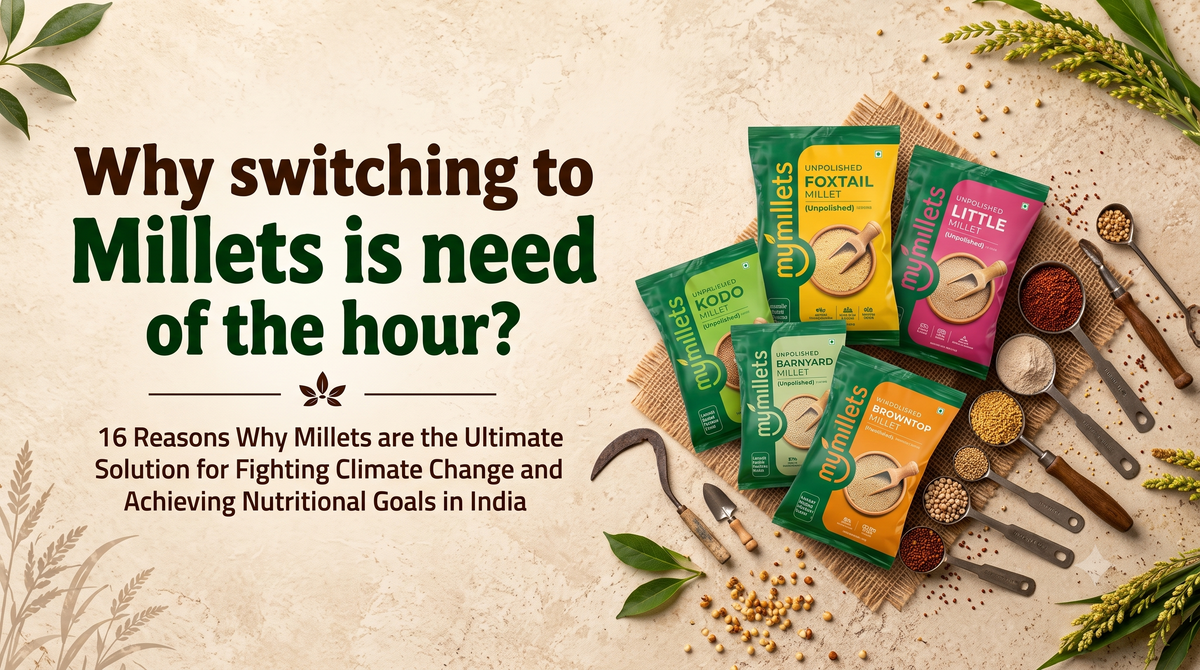
Indian agriculture is returning to its organic roots. Our country now produces over 15.4 million tonnes of millets every year and contributes to over a third of global production. This large scale of farming requires strong checks and balances to keep the practice ethical.
At mymillets we provide factory fresh unpolished millets while supporting a vast network of dedicated farmers. But you might wonder why we choose to sell only unpolished grains. Let us walk you through what unpolished millets mean and how choosing them benefits your daily health.
What are unpolished millets?
Unpolished millets are whole grains that retain their natural outer bran layer after the inedible husk is removed. They are left in their purest form to ensure maximum nutritional value.
Commercial markets began polishing these grains to make them look whiter and to extend their shelf life. The polishing machines use friction to strip away the bran. This processing removes crucial minerals and alters the core grain structure.
In fact, the outer bran holds the vast majority of the dietary fiber and essential vitamins. Keeping the grain unpolished saves this vital layer. Positive millets or Siiridhanya millets maintain an impressive fiber content ranging from 8% to 12.5% because they remain unpolished. This native fiber helps your body digest carbohydrates at a measured pace. Eating unpolished millets guarantees you receive the full health benefits and sustained energy that these resilient crops offer.
The Millet Processing Cycle

Harvesting and Drying
Farmers harvest the millets and dry them in the farm yard to lower the native moisture content. This step prevents microbial growth and ensures the grains remain safe for storage.
Primary Cleaning and Storage
The dried millets undergo an initial cleaning process to separate the grains from visible field debris like stalks and leaves. Workers then pack the harvest into gunny bags or bulk bins to keep them secure until they reach the commercial facility.
Commercial Cleaning and Destoning
Specialized machines use air flow and vibrating screens to separate the grains from fine dust and heavy stones. This grading process categorizes the millets by size to guarantee a uniform batch for the mechanical steps ahead.
Dehulling
Industrial hullers apply controlled impact and friction to detach the hard inedible outer husk from the edible seed. This step requires precise machinery to remove the husk while retaining the nutritious bran layer underneath.
Secondary Processing
Facilities use hammer mills or roller mills to grind the dehulled grains into fresh flour and grits. The grains can also undergo soaking, sprouting, or high temperature roasting to neutralize antinutrients and boost their natural flavor.
Tertiary Processing and Value Addition
The prepared flours and whole grains go through extrusion or baking to create convenient consumer goods. This final stage produces items like millet noodles, breakfast cereals, cookies, and ready to cook health mixes.
Polished vs. Unpolished Millets: Understanding the Core Differences
|
Feature |
Unpolished Millets (The mymillets Standard) |
Polished Millets (Commercial Grade) |
|
Processing method |
Only the inedible husk is removed to make the grain safe for consumption. |
Abrasive machinery applies friction to strip away the surface layers. |
|
Bran status |
The native bran layer remains intact. |
The bran layer is scrubbed away to improve visual appeal. |
|
Carbohydrate to Fiber ratio |
Single digit ratio ranging between 5.5 and 8.8. |
High ratio due to the mechanical removal of natural dietary fiber. |
|
Blood Sugar impact |
Low Glycemic Index forces a slow and steady glucose release over several hours. |
High Glycemic Index floods the bloodstream with sudden sugar spikes. |
|
Nutritional value |
Packed with bioavailable iron, calcium, B vitamins, and essential antioxidants. |
Depleted of native minerals and reduced to simple starch. |
|
Appearance |
Earthy color with a natural grain texture. |
Whiter and smoother texture resembling refined grains. |
|
Shelf life |
Shorter natural shelf life requiring factory fresh delivery. |
Extended shelf life engineered for long supermarket storage. |
How mymillets avoids polishing (And why we do it)
At mymillets we build our business on the promise of an honest product. We source our grains from a network of farmers who benefit from every purchase you make. Our factory lines follow standard protocols to ensure premium quality while avoiding commercial polishing.
Dr. Khadar Vali states that polished millets lose their essential fiber and medicinal properties. This makes unpolished grains the only beneficial choice for your health. We follow this exact philosophy in our processing. We clean the harvest to remove stones and perform essential dehusking. Our commitment ensures you receive the finest millets with the bran intact.
Why the outer bran layer is the secret to millet nutrition

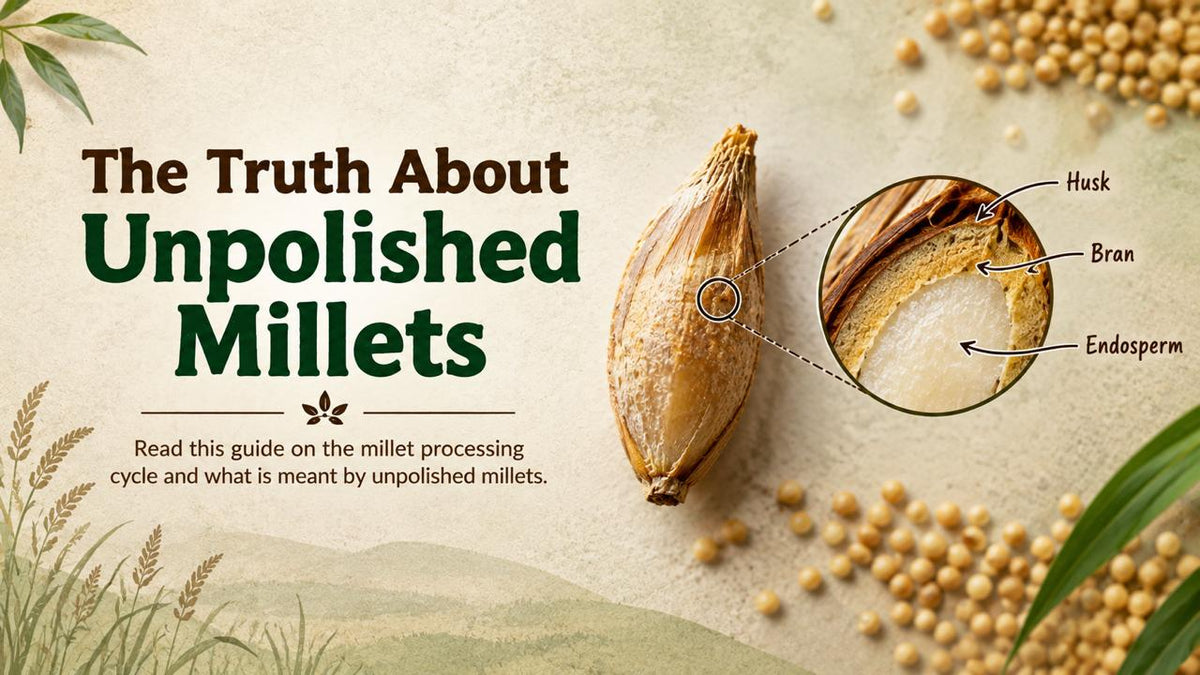
Think of a millet grain as a structure with three distinct parts. Understanding this anatomy shows you exactly why the bran matters.
- The Husk:This is the hard protective shell. It is completely inedible and must be removed during the primary dehulling process.
- The Bran: This thin skin sits right beneath the husk. It contains the concentrated nutritional wealth of the seed.
- The Endosperm: This is the inner starchy center. It makes up 80 to 85 percent of the entire millet kernel.
When commercial factories polish a millet, their machines use abrasive friction to scrub away the bran layer. This leaves behind only the endosperm.
Here is a factual breakdown of the nutrition housed in the bran and why your body requires it:
|
Nutrient Category |
Concentration in Whole Millets |
Biological Function |
|
Dietary Fiber |
7 to 12 grams per 100g |
Aids digestion and manages blood sugar levels. |
|
Essential Minerals |
5 to 15 mg of iron and 100 to 150 mg of magnesium per 100g |
Prevents anemia and improves heart function. |
|
Antioxidants |
0.2 to 0.5 percent concentration of polyphenols |
Combats oxidative stress and prevents chronic diseases. |
|
Plant Proteins |
Up to 13 percent of the total grain profile |
Delivers essential amino acids for tissue repair. |
Eating a polished millet means you are eating plain starch. The outer bran is the sole reason millets are classified as nutri-cereals. Keeping it intact is the only way to access these health benefits.
How to identify genuine unpolished millets before you buy
Step into the local market and cup a handful of millet grains in your palm. You need to take a close look at texture, color, and finish to identify unpolished millets. Follow these simple steps before you make your purchase:
- Inspect the surface texture: Run your fingers over the grains. Genuine unpolished millets feel slightly rough, uneven, and textured because the outer bran layer is still tightly wrapped around the seed. If the surface feels slippery, glass-smooth, or slick to the touch, then the machines have scrubbed away that essential layer.
- Examine the color and shine: Look closely at a pinch of the grains under natural light. Unpolished millets display a matte, earthy, and uniform natural hue unique to each variety. Polished grains look unnaturally shiny, glossy, or stark white.
- Check the Bag for Residue: Shake the package or look at the bottom of the container. Unpolished grains will often show a tiny amount of natural flour or fine bran dust clinging to them.
Want to skip the guesswork and ensure your pantry gets the absolute best? Head over to mymillets to grab your factory-fresh, 100% unpolished millet packs.