
Filters
11 products
Millets FAQs
-
1. What are millets?
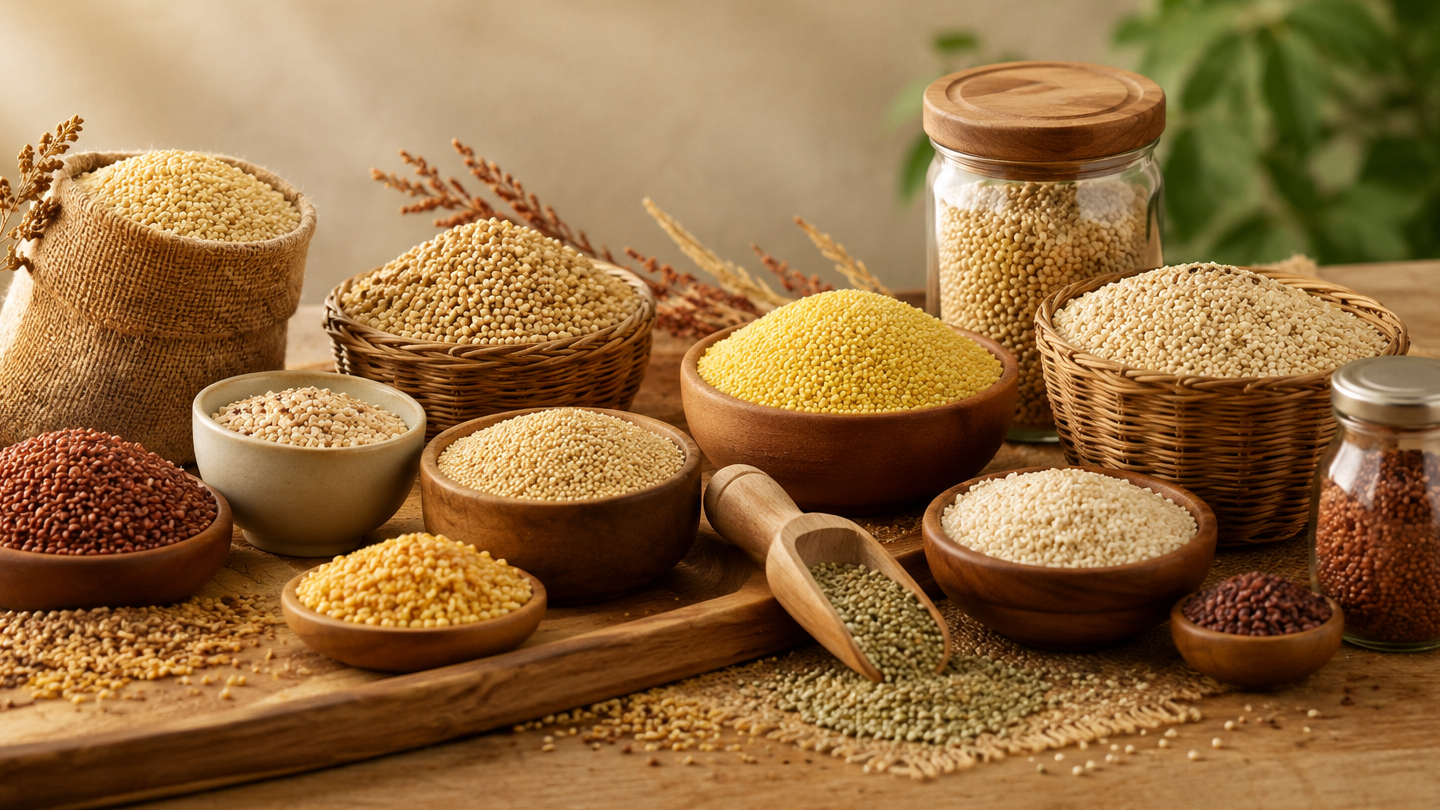
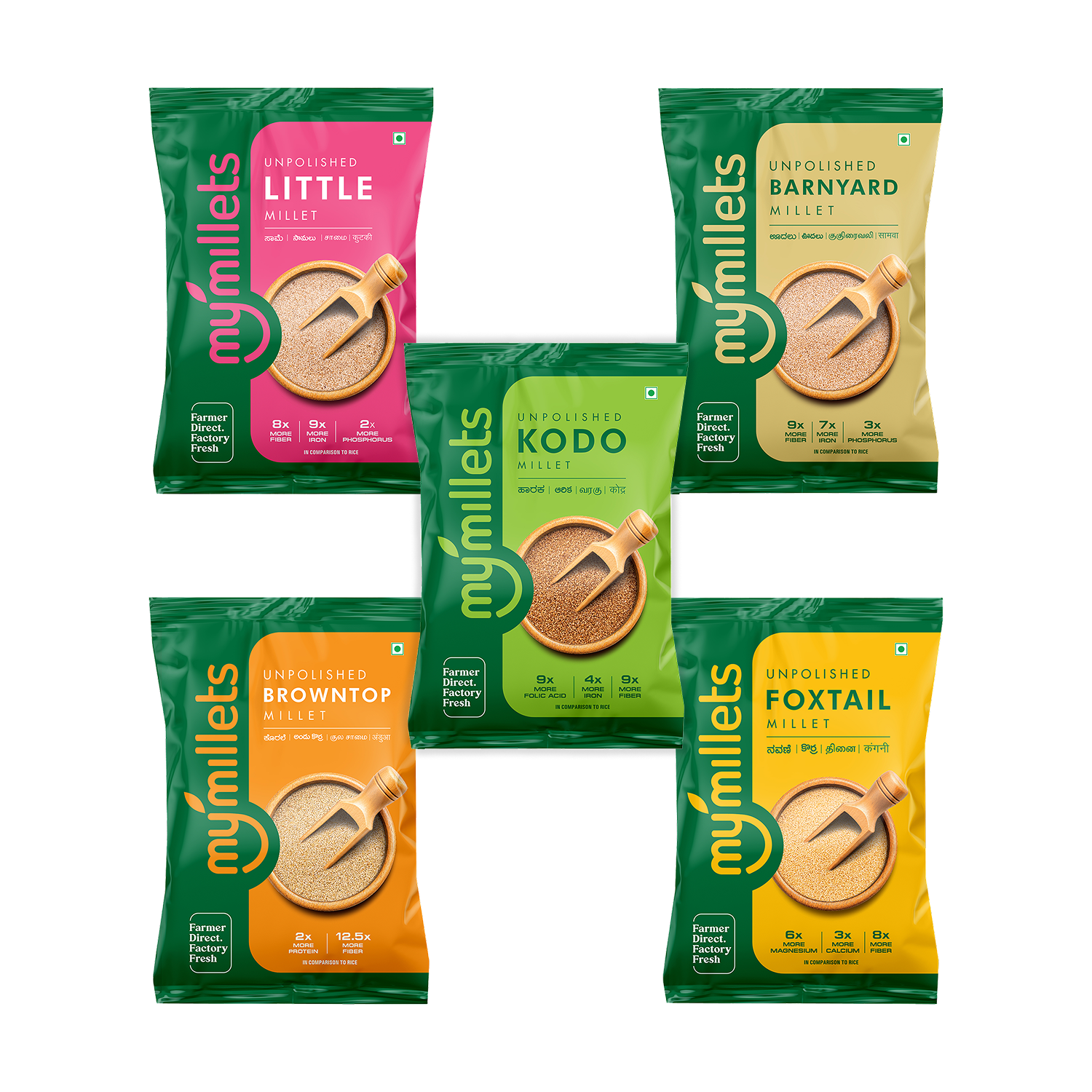
Millets are a group of ancient whole grains that have been cultivated for thousands of years and are known for their nutritional value and versatility. Popular varieties include Foxtail Millet, Little Millet, Barnyard Millet, Kodo Millet, Pearl Millet (Bajra), Finger Millet (Ragi), Proso Millet, and Sorghum (Jowar). Millets are naturally rich in dietary fibre, plant-based protein, essential vitamins, and minerals, making them a wholesome addition to everyday meals.
2. Why are millets considered a superfood?
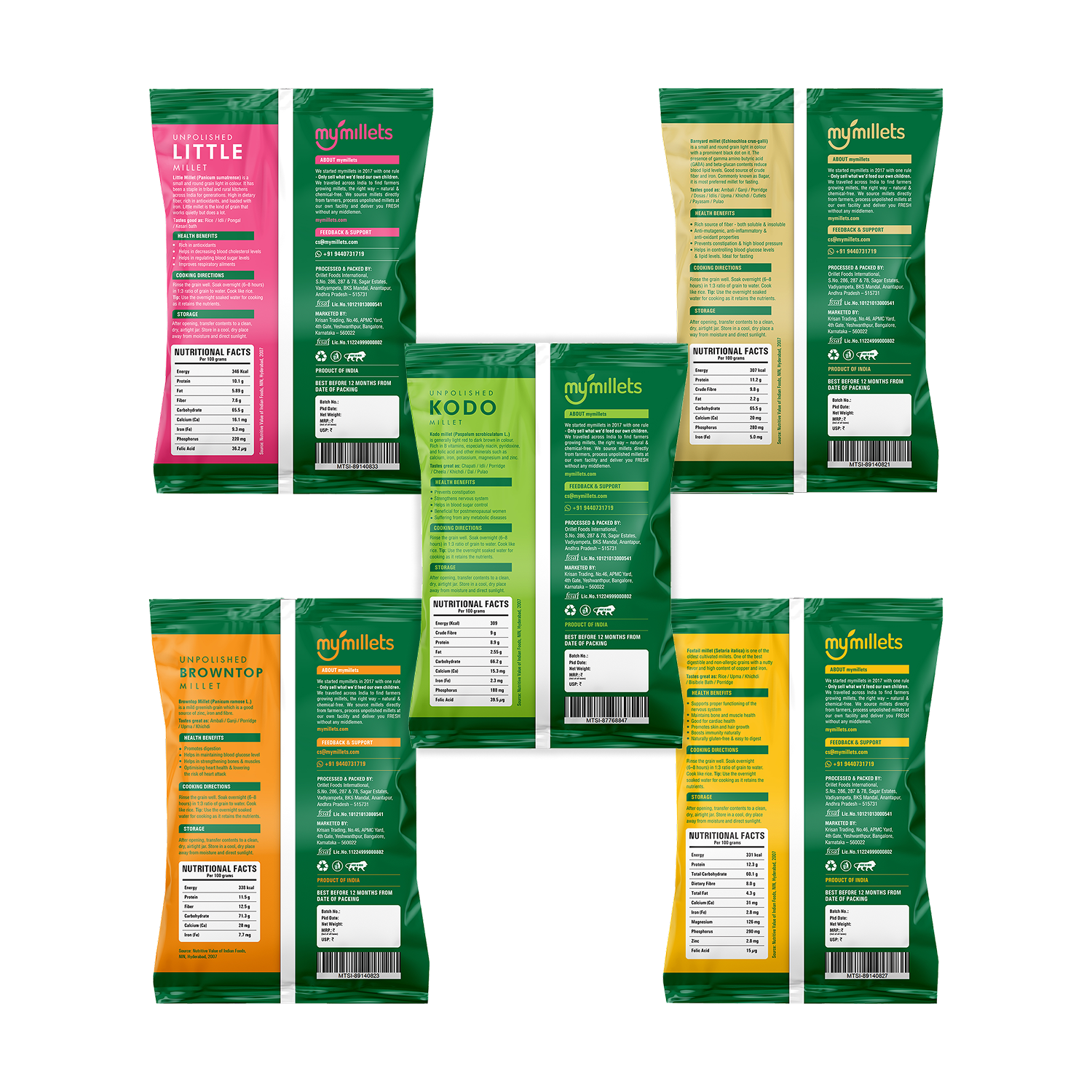
Millets are often referred to as superfoods because they are nutrient-dense whole grains containing fibre, protein, iron, calcium, magnesium, phosphorus, and antioxidants. They are minimally processed and can be incorporated into a balanced diet as an alternative to refined grains.
3. What are the different types of millets available?
The most commonly consumed millets include:
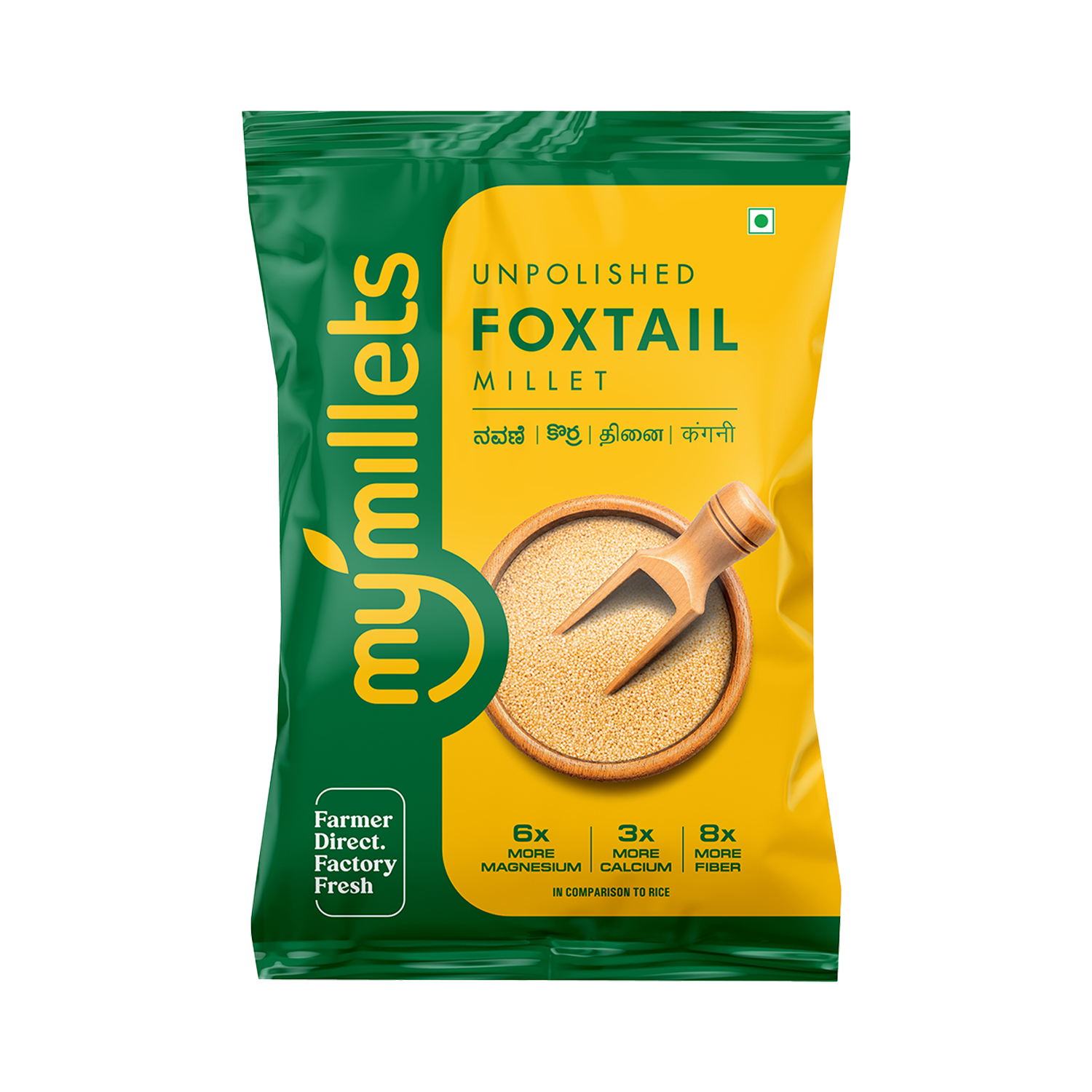
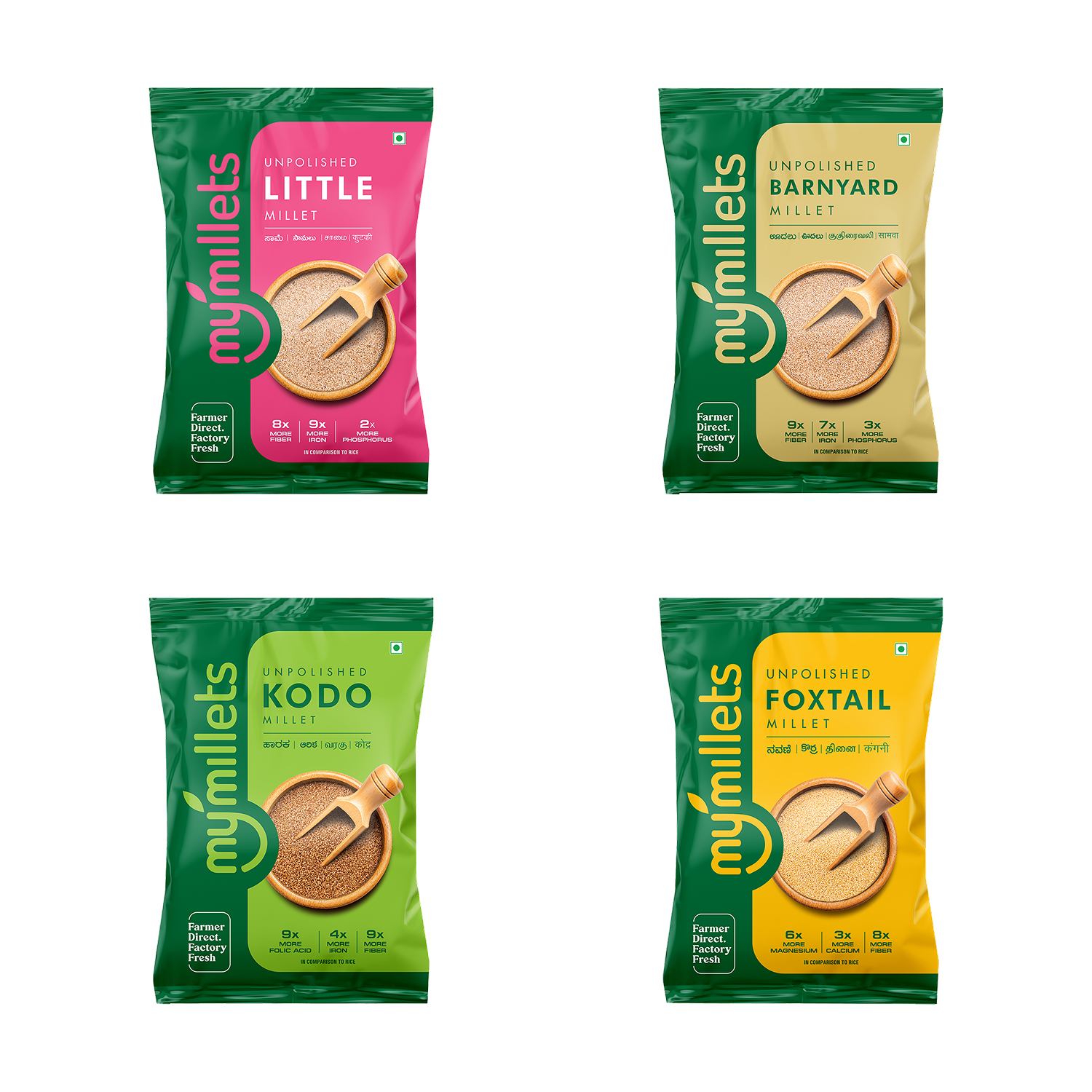
• Foxtail Millet
• Little Millet
• Barnyard Millet
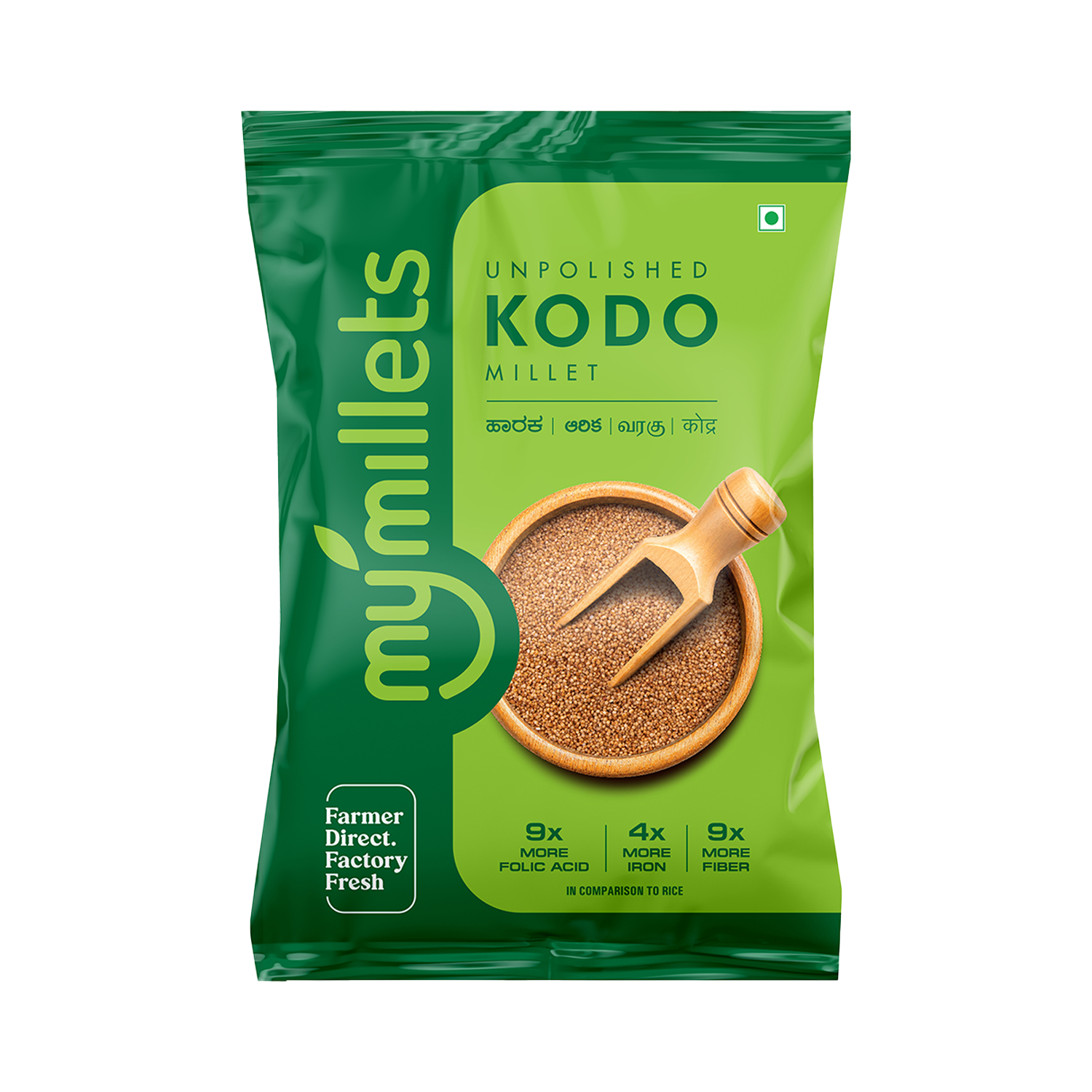
• Kodo Millet
• Pearl Millet (Bajra)
• Finger Millet (Ragi)
• Sorghum (Jowar)
• Proso Millet
Each variety has unique cooking characteristics, flavour profiles, and nutritional attributes.
4. Which millet is best for daily consumption?
There is no single "best" millet. Rotating different varieties throughout the week allows you to enjoy a wider range of nutrients and textures. Including multiple whole grains as part of a varied diet is generally recommended.
5. Are millets healthier than rice?
Millets and rice both have their place in a balanced diet. Compared to refined white rice, many millets naturally contain higher amounts of dietary fibre and certain micronutrients. Choosing whole grains can contribute to greater dietary variety and nutritional balance.
6. Are millets gluten-free?
Yes. Millets are naturally gluten-free grains. However, individuals with celiac disease or severe gluten sensitivity should ensure the products are processed and packaged in facilities that prevent cross-contamination.
7. Can millets be used instead of rice or wheat?
Yes. Millets are highly versatile and can replace rice or wheat in many everyday recipes including pulao, khichdi, upma, porridge, salads, rotis, dosas, idlis, and even desserts depending on the variety used.
8. Should millets be soaked before cooking?
Soaking is generally recommended for most whole millets before cooking as it can improve texture and reduce cooking time. The ideal soaking duration may vary depending on the millet variety.
9. How do you cook whole millets?
Cooking methods vary slightly depending on the millet type, but generally involve rinsing, optional soaking, and cooking with water until tender. Millets can be prepared using pressure cookers, saucepans, rice cookers, or Instant Pots.
10. What dishes can be prepared using millets?
Millets can be used to prepare a wide variety of recipes including:
• Khichdi
• Upma
• Pulao
• Pongal
• Salads
• Breakfast bowls
• Rotis
• Dosas
• Idlis
• Soups
• Cutlets
• Desserts
Their versatility makes them suitable for breakfast, lunch, dinner, and snacks.
11. How should millets be stored?
Store millets in an airtight container in a cool, dry place away from direct sunlight and moisture. Proper storage helps maintain freshness and extends shelf life.
12. Can children and senior citizens consume millets?
Millets can be incorporated into meals for people of different age groups as part of a balanced diet. Recipes and portion sizes may be adapted according to individual dietary needs and preferences.
13. Are millets suitable for vegetarians and vegans?
Yes. Millets are naturally plant-based and are suitable for vegetarian and vegan lifestyles. They pair well with vegetables, legumes, dairy, and plant-based proteins.
14. Why choose mymillets?
At mymillets, we focus on delivering premium-quality millet products sourced with care and processed to preserve their natural goodness. Our products are carefully selected to help you enjoy wholesome ingredients that fit seamlessly into your everyday cooking.
15. How can I include millets in my everyday diet?
Adding millets to your meals is simple. You can:
• Replace rice with cooked millets
• Prepare millet khichdi or pulao
• Make nutritious breakfast bowls
• Use millet flour for rotis and pancakes
• Prepare millet dosa or idli
• Add cooked millets to soups and salads
• Experiment with millet-based desserts and snacks
Small, gradual changes can help make whole grains a regular part of your lifestyle.
1. What are millets?
Millets are a group of ancient whole grains that have been cultivated for thousands of years and are known for their nutritional value and versatility. Popular varieties include Foxtail Millet, Little Millet, Barnyard Millet, Kodo Millet, Pearl Millet (Bajra), Finger Millet (Ragi), Proso Millet, and Sorghum (Jowar). Millets are naturally rich in dietary fibre, plant-based protein, essential vitamins, and minerals, making them a wholesome addition to everyday meals.
2. Why are millets considered a superfood?
Millets are often referred to as superfoods because they are nutrient-dense whole grains containing fibre, protein, iron, calcium, magnesium, phosphorus, and antioxidants. They are minimally processed and can be incorporated into a balanced diet as an alternative to refined grains.
3. What are the different types of millets available?
The most commonly consumed millets include:
• Foxtail Millet
• Little Millet
• Barnyard Millet
• Kodo Millet
• Pearl Millet (Bajra)
• Finger Millet (Ragi)
• Sorghum (Jowar)
• Proso Millet
Each variety has unique cooking characteristics, flavour profiles, and nutritional attributes.
4. Which millet is best for daily consumption?
There is no single "best" millet. Rotating different varieties throughout the week allows you to enjoy a wider range of nutrients and textures. Including multiple whole grains as part of a varied diet is generally recommended.
5. Are millets healthier than rice?
Millets and rice both have their place in a balanced diet. Compared to refined white rice, many millets naturally contain higher amounts of dietary fibre and certain micronutrients. Choosing whole grains can contribute to greater dietary variety and nutritional balance.
6. Are millets gluten-free?
Yes. Millets are naturally gluten-free grains. However, individuals with celiac disease or severe gluten sensitivity should ensure the products are processed and packaged in facilities that prevent cross-contamination.
7. Can millets be used instead of rice or wheat?
Yes. Millets are highly versatile and can replace rice or wheat in many everyday recipes including pulao, khichdi, upma, porridge, salads, rotis, dosas, idlis, and even desserts depending on the variety used.
8. Should millets be soaked before cooking?
Soaking is generally recommended for most whole millets before cooking as it can improve texture and reduce cooking time. The ideal soaking duration may vary depending on the millet variety.
9. How do you cook whole millets?
Cooking methods vary slightly depending on the millet type, but generally involve rinsing, optional soaking, and cooking with water until tender. Millets can be prepared using pressure cookers, saucepans, rice cookers, or Instant Pots.
10. What dishes can be prepared using millets?
Millets can be used to prepare a wide variety of recipes including:
• Khichdi
• Upma
• Pulao
• Pongal
• Salads
• Breakfast bowls
• Rotis
• Dosas
• Idlis
• Soups
• Cutlets
• Desserts
Their versatility makes them suitable for breakfast, lunch, dinner, and snacks.
11. How should millets be stored?
Store millets in an airtight container in a cool, dry place away from direct sunlight and moisture. Proper storage helps maintain freshness and extends shelf life.
12. Can children and senior citizens consume millets?
Millets can be incorporated into meals for people of different age groups as part of a balanced diet. Recipes and portion sizes may be adapted according to individual dietary needs and preferences.
13. Are millets suitable for vegetarians and vegans?
Yes. Millets are naturally plant-based and are suitable for vegetarian and vegan lifestyles. They pair well with vegetables, legumes, dairy, and plant-based proteins.
14. Why choose mymillets?
At mymillets, we focus on delivering premium-quality millet products sourced with care and processed to preserve their natural goodness. Our products are carefully selected to help you enjoy wholesome ingredients that fit seamlessly into your everyday cooking.
15. How can I include millets in my everyday diet?
Adding millets to your meals is simple. You can:
• Replace rice with cooked millets
• Prepare millet khichdi or pulao
• Make nutritious breakfast bowls
• Use millet flour for rotis and pancakes
• Prepare millet dosa or idli
• Add cooked millets to soups and salads
• Experiment with millet-based desserts and snacks
Small, gradual changes can help make whole grains a regular part of your lifestyle.
