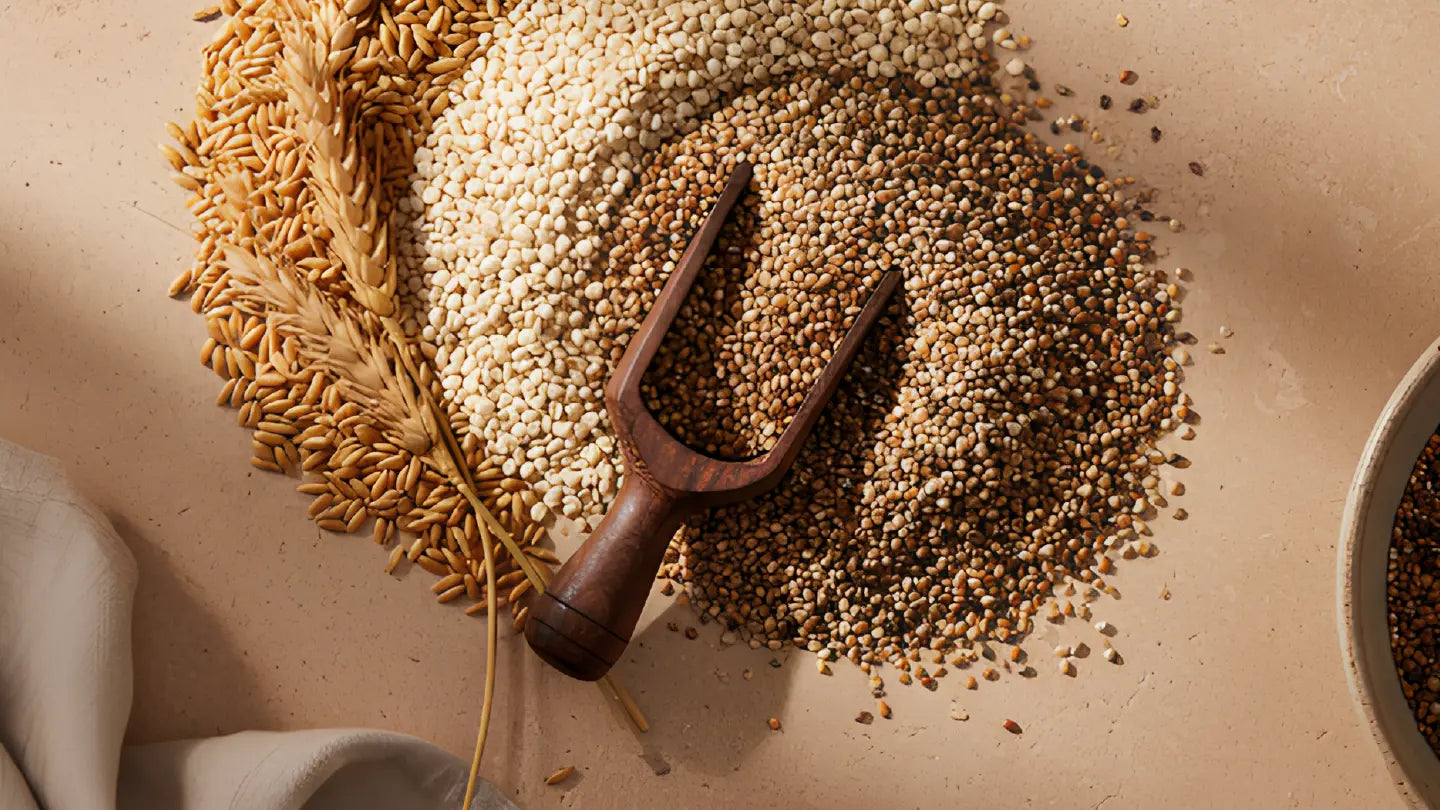
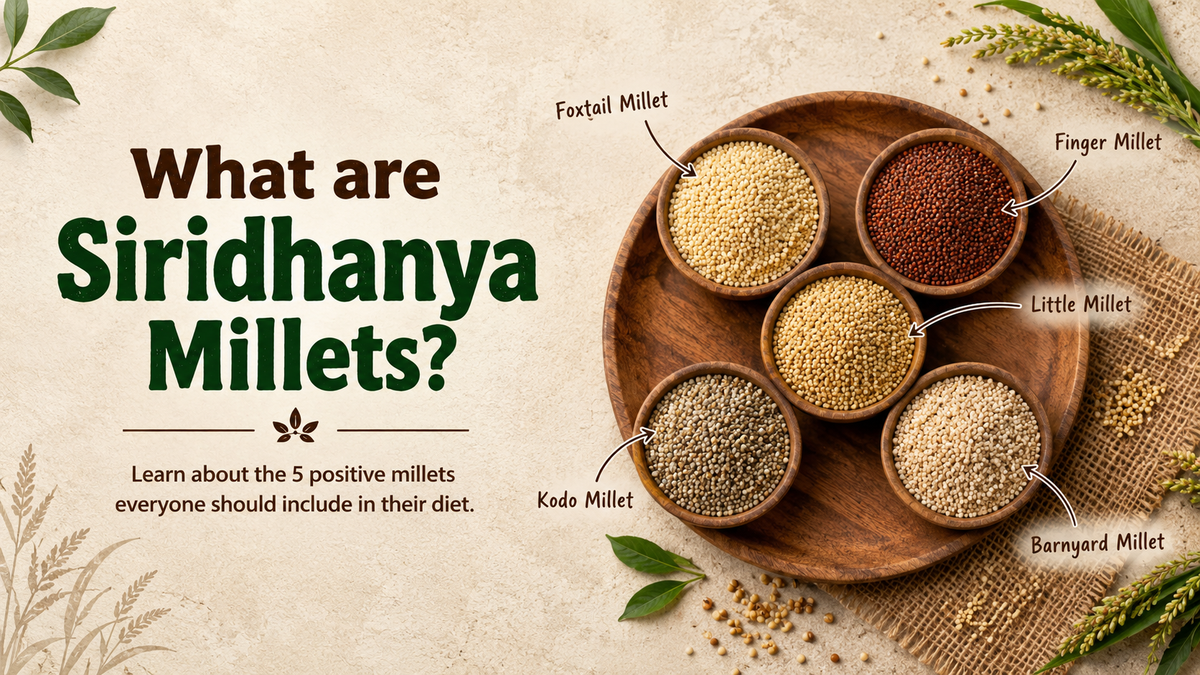
Siridhanya or Shridhanya refers to positive millets. Dr. Khader Vali, also known as the millet man of India, popularized this classification. The word Siri or Shri translates to wealth and Dhanya means grain. It has gained importance over the years and serves as a practical substitute for water intensive crops like rice and wheat. Experts project that millets will become a vital food resource by 2040 owing to climate change and ground water depletion.
Padma Shri awardee Dr. Khadar Vali spearheaded the revival of these ancient crops. Furthermore the Indian government recognizes their value and calls millets Shree Anna i.e., honored grain or the mother of all grains.
In this blog we will dive deep into what Siridhanya is and why it is the absolute need of the hour.
What Makes a Millet "Positive"?
The term Siridhanyalu refers to grains that offer true wealth in the form of health. Their healing power lies in their carbohydrate to dietary fiber ratio. Nutritional science divides grains into Positive, Neutral and Negative categories.
Positive millets feature a single digit fiber to carbohydrate ratio. They contain 8% to 12.5% dietary fiber. This high fiber content allows glucose to release slowly into the blood over 6 to 8 hours. This slow release prevents sugar spikes and combats lifestyle diseases. The ratio specifically falls between 5.5 and 8.8. Negative grains like white rice have double digit ratios and cause rapid sugar spikes.
The Grain Hierarchy: Positive, Neutral, and Negative
|
Grain Category |
Examples |
Dietary Fiber Content |
Glucose Release Time |
Health Impact & Properties |
|
Positive Millets (Siridhanya) |
Foxtail, Barnyard, Kodo, Little, Browntop |
8% to 12.5% |
6 to 8 hours |
Actively supports natural healing, prevents sugar spikes, and helps manage chronic lifestyle conditions. |
|
Neutral Millets |
Finger millet (Ragi), Pearl millet (Bajra), Sorghum (Jowar) |
1.2% to 6% |
Within 2 hours |
Maintains general health and provides essential daily nutrients, but lacks specific disease-curing properties. |
|
Negative Grains |
Polished white rice, refined wheat (Maida) |
Less than 2% |
15 to 35 minutes |
Triggers rapid sugar spikes, severely strains the pancreas, and leads to metabolic fatigue and insulin resistance. |
The 5 Siridhanya Positive Millets
The five Positive Millets are namely Foxtail Millet, Barnyard Millet, Kodo Millet, Little Millet, and Browntop Millet.
Foxtail Millet
- Scientific Name: Setaria italica
- Commonly Known in India As: Navane, Thinai, Kangni
- GI Index: 50 to 54
- Macronutrients: High complex carbohydrates and 8% dietary fiber
- Micronutrients: Rich in iron and calcium
- Protein per 100g: 12.3 grams
Foxtail millet holds a deep history in ancient Indian agriculture. It served as a staple before the widespread adoption of modern grains. Today it stands out for its high protein content and easy digestibility. Farmers favor it because it grows with minimal water.
Benefits:
It is beneficial for the nervous system and psychological disorders. It provides support for arthritis and Parkinson's disease.

Barnyard Millet
- Scientific Name: Echinochloa esculenta
- Commonly Known in India As: Oodalu, Kuthiraivali, Sanwa
- GI Index: 41 to 50
- Macronutrients: High fiber at 10% and low calories
-
Micronutrients: Rich in zinc and magnesium
- Protein per 100g: 6.2 grams
People traditionally consumed Barnyard millet during fasting periods in India. It possesses the lowest calorie count among all millets. This grain grows quickly in harsh conditions. Modern nutritionists value it highly for weight management protocols.
Benefits:
It effectively cleanses the liver and kidneys. It helps control excess bad cholesterol and thyroid issues.

Kodo Millet
- Scientific Name: Paspalum scrobiculatum
- Commonly Known in India As: Harka, Varagu, Kodra
- GI Index: 53
- Macronutrients: 9% dietary fiber and complex carbohydrates
- Micronutrients: Very high in polyphenols and antioxidants
- Protein per 100g: 8.3 grams
Kodo millet has thrived in dry Indian regions for over 3,000 years. It acts as a powerful scavenger of free radicals. The dark red grain has unique drought resistance. It remains a prized grain for long term storage.
Benefits:
It purifies the blood and boosts bone marrow efficiency. It aids in treating anemia and asthma.
Little Millet
- Scientific Name: Panicum sumatrense
- Commonly Known in India As: Saame, Samai, Kutki
- GI Index: 52
- Macronutrients: 9.8% dietary fiber and complex carbohydrates
- Micronutrients: Abundant in B vitamins and essential minerals
-
Protein per 100g: 7.7 grams
Little millet resembles rice closely in texture and size. This makes it the easiest transition grain for beginners. Historically it played a major role in regional tribal diets. It cooks very quickly compared to larger millets.
Benefits:
It supports male and female reproductive systems. It helps manage PCOD and cleanses the human lymphatic system.

Browntop Millet
- Scientific Name: Urochloa ramosa
- Commonly Known in India As: Korle, Panivaragu, Choti Kangni
- GI Index: 50
- Macronutrients: 12.5% dietary fiber and complex carbohydrates
- Micronutrients: High in iron and potassium
- Protein per 100g: 11.5 grams
Browntop millet is the rarest grain in the Siridhanya family. It is primarily grown in the dry zones of Karnataka. It demands extreme care during harvesting. Dr. Khadar Vali considers it the most powerful healing grain.
Benefits:
It is highly effective for the digestive system. It cures ulcers and various gastrointestinal issues.

7 Facts About Siridhanya Millets You Must Know
- The ultimate water savers: Growing one kilogram of paddy rice consumes 8000 liters of water. Foxtail millet requires only 200 liters to produce the same amount. This efficiency makes millets a highly sustainable choice for our planet.
- The forgotten ancient staple: Indians consumed these grains as their primary staple for thousands of years. The major dietary shift to rice and wheat occurred roughly 130 years ago. British rulers dismissed these vital crops as minor grains and promoted cash crops that demand heavy irrigation.
- The glucose shield: White rice turns into sugar in just 15 to 35 minutes. Positive millets take 5 to 7 hours to release glucose into your bloodstream. This slow process provides sustained energy and protects your pancreas from insulin shock.
- Rich in dietary fiber: The dietary fiber in Siridhanya millets is interwoven from the core of the kernel all the way to the outer layer. Wheat and rice only hold fiber in their outermost bran. This gives positive millets their extraordinary healing power.
- Extreme climate resilience: Browntop millet reaches full maturity and yields grain in just 75 days. It requires only a few spells of rain to grow. These ancient crops thrive in barren soils where modern hybrid plants fail.
- The magic healing ratio: A grain must have a carbohydrate to fiber ratio below 10 to possess true medicinal properties. Siridhanya millets hit this mark with ratios between 5.5 and 8.8. Paddy rice sits at a staggering ratio of 395.
- Active body cleansers: Positive millets actively work to remove toxins from your body. They function as internal cleansers rather than just basic fuel.
Polished vs. Unpolished Siridhanya Millets: Why Processing Destroys Nutrition
Polishing is an industrial process that removes the outer layers of a grain. Rice and wheat polishing usually strips away a tiny fraction of fiber. As mentioned before, Siridhanya millets have their dietary fiber interwoven from the core all the way to the outer layer.
The outermost bran layer houses up to 80% of the vital vitamins and essential minerals. Machine polishing destroys this bran layer completely. It strips the grain of its medicinal properties. Many commercial brands use heavy machinery to polish millets for a longer shelf life. Mymillets strictly avoids this harmful practice. We promote 100% unpolished grains to retain the vital nutrients in these grains.
How to Cook and Transition to Siridhanya Millets
Cooking these ancient grains requires a simple but strict method. You must follow the golden rule of soaking.
- You must soak these millets in water for at least two hours before cooking.
- Browntop millet requires a minimum of four hours of soaking time.
- You should consume only one type of positive millet per day across all three meals to maximize health benefits and flush out toxins.
- Avoid negative grains like paddy rice and wheat. Their extremely low fiber content causes harmful and rapid glucose spikes.
- Use a millet to water ratio of 1:2.5 for pressure cooking.
- You can easily replace white rice with millets to make everyday dishes like upma and khichdi or pongal.
Nourish Your Body with Pure, Farm-Direct Mymillet Siridhanya
Finding genuine and unpolished millets in urban markets presents a major challenge. Many store bought options are disguised as healthy but suffer from heavy machine polishing. Mymillets bridges this gap directly. We offer the all in one Positive Millets Combo Pack. We source this directly from small holder farmers across Karnataka.
Mymillets avoids corporate middlemen and promotes fair farm direct trade. We guarantee products that are 100% unpolished and hand cleaned. Our millets are carefully sun dried and delivered right to your door. Start your health journey today with grains that truly heal.
Shipping is free on all orders. Buy now. 
Frequently Asked Questions About Siridhanya Millets
1. Can I mix all five Siridhanya millets together when cooking?
No. You must not mix the grains together. Dr. Khadar Vali advises eating only one type of positive millet per day across all your meals. Mixing them prevents your body from absorbing their specific medicinal properties.
2. Do I really need to soak the millets before cooking?
Yes. Soaking is a strict rule. You must soak these millets for at least two hours to soften the interwoven dietary fiber. Browntop millet requires a minimum of four hours of soaking time.
3. Can I eat Siridhanya millets if I have diabetes?
Yes. Positive millets feature a beneficial single digit carbohydrate to fiber ratio. They release glucose slowly into your bloodstream over six to eight hours. This slow release prevents dangerous sugar spikes.
4. Are Siridhanya millets naturally gluten free?
Yes. All five positive millets lack gluten.
5. Can I replace white rice and wheat with millets?
Yes. You can use millets as a direct daily replacement. You can cook them just like rice and use them to make your favorite staples. They work well for upma, khichdi, idli, dosa and pongal.
6. Why should I choose unpolished millets over polished ones?
Machine polishing destroys the outermost bran layer of the grain. This layer holds up to 80% of the vital vitamins and minerals. You must choose 100% unpolished millets to receive their full healing properties.
7. How much water should I use to cook them?
If you cook the millets in a pressure cooker, use a millet to water ratio of 1:2. If you cook them in an open vessel, you will need four to five times the amount of water.
8. Can my children eat Siridhanya millets?
Yes. Positive millets provide great nutrition for children of all ages. You can feed them Foxtail millet to boost their immunity. You can also prepare simple millet gruel as a wholesome meal for them.